


Dr Carolyn Ng – Specialist Orthodontist
Dr Carolyn Ng
Specialist Orthodontist
Specialist Orthodontist

Tooth-Coloured and Clear Ceramic Braces

Ceramic braces are a fixed orthodontic appliance that works on the same mechanical principles as conventional metal braces, with one significant difference; the brackets are made from a tooth-coloured or clear ceramic material rather than stainless steel. For patients who want the reliability of fixed orthodontic treatment but with a less visible appearance, they are worth understanding in detail.
Table of Contents
- How Ceramic Braces Work
- Appearance and Visibility
- Staining and Discolouration
- Durability and Care
- Who Ceramic Braces May Suit
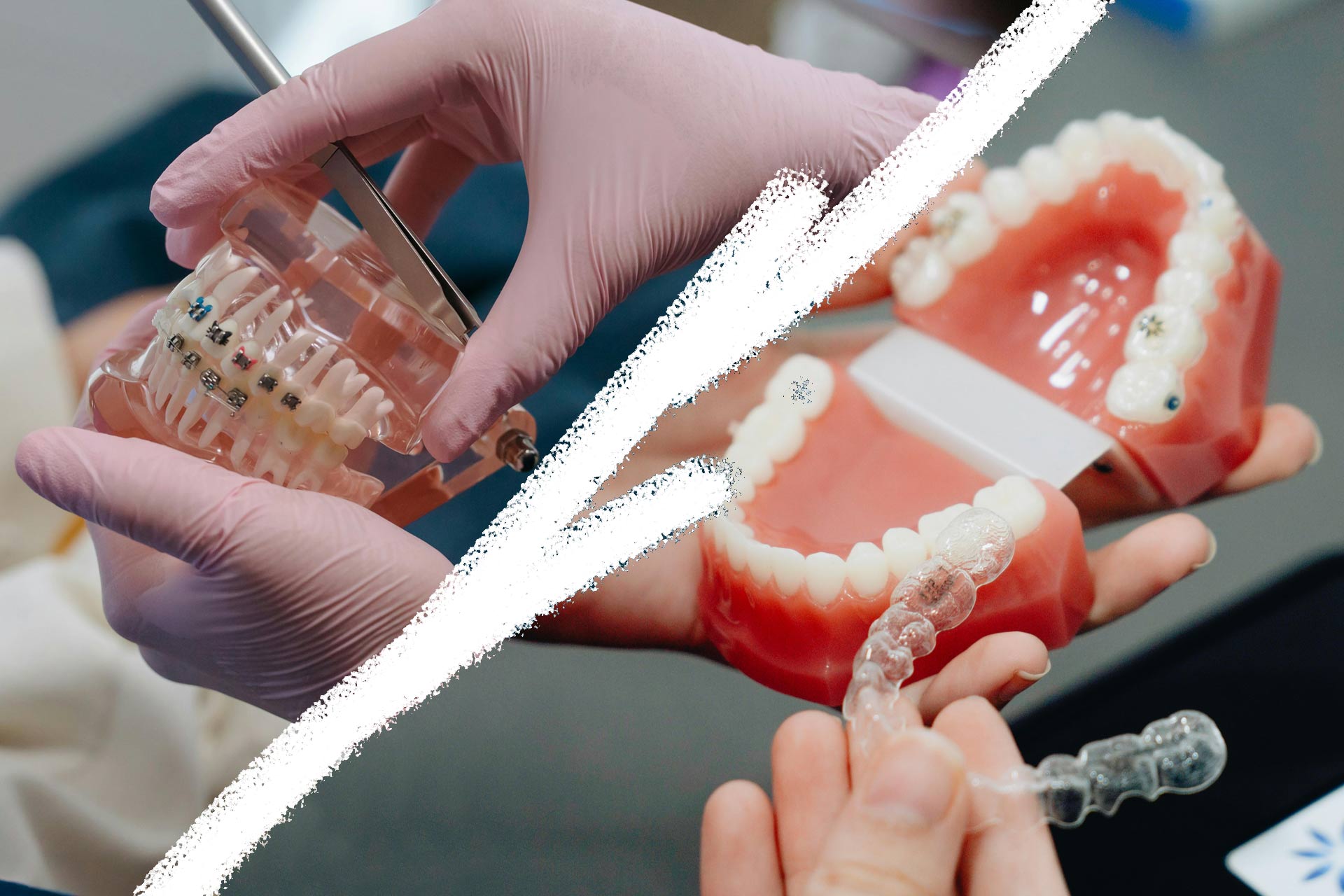
- Ceramic Braces Compared to Other Options
- Is This Option Right For You
- Frequently Asked Questions

How Ceramic Braces Work
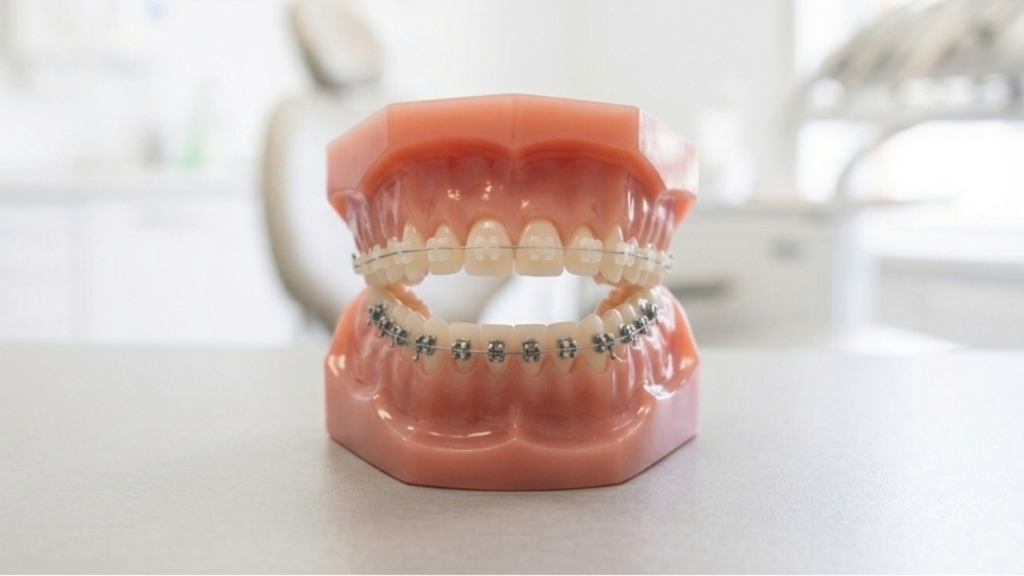
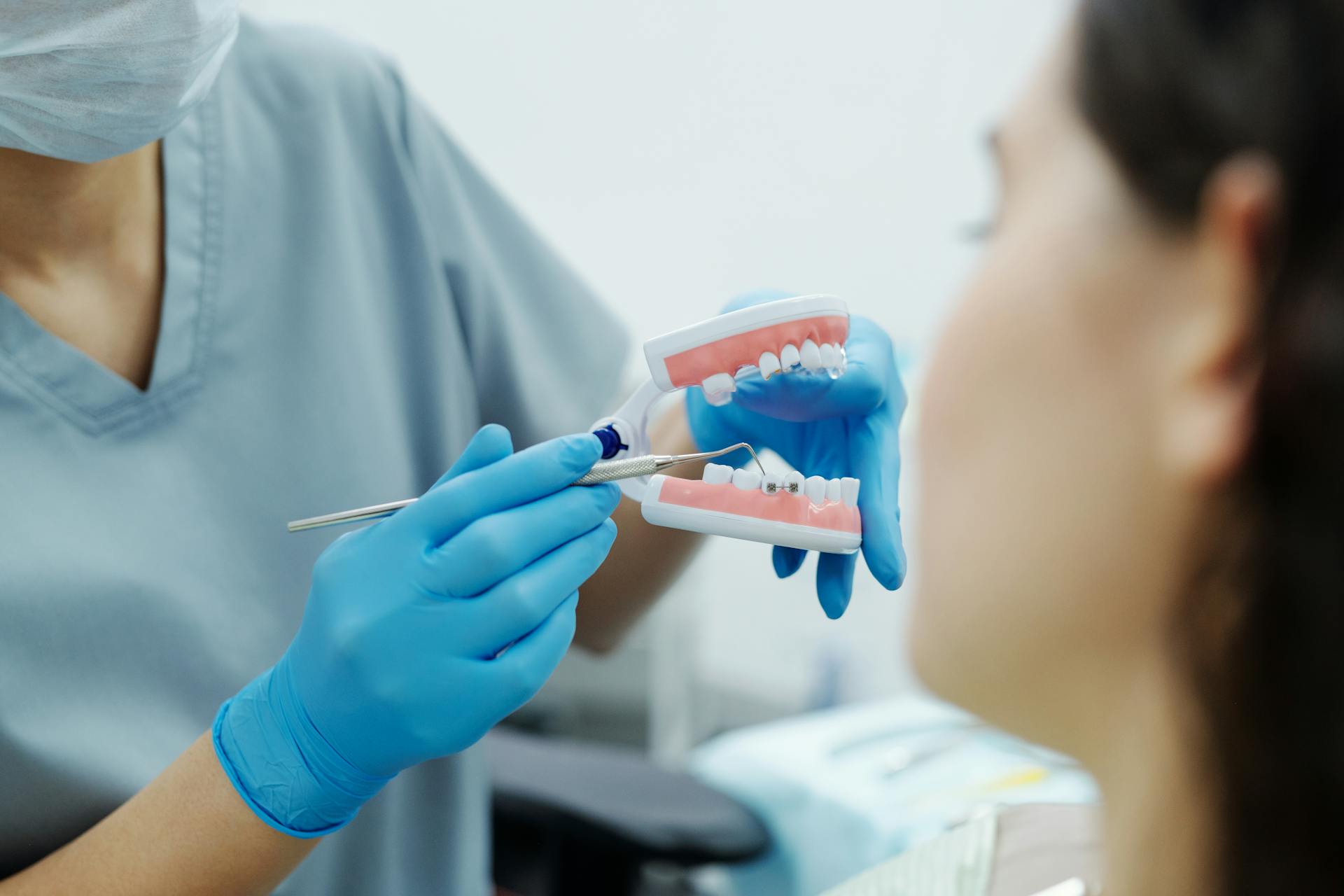
Ceramic braces function in the same way as metal braces. Brackets are glued to the front surface of each tooth using a special dental glue, and an archwire runs through each bracket to connect them. Gentle pressure is applied through the wire, that moves the teeth gradually into their planned positions over the course of treatment.
The brackets themselves are made from a polycrystalline or monocrystalline ceramic material, which is hard, smooth, and resistant to the forces involved in orthodontic treatment. The archwire that runs through the brackets is typically stainless steel, though tooth-coloured coated wires are available for patients who want to maximise the aesthetic effect. It is worth noting that coated wires can wear over time, and the coating may not maintain its appearance for the full duration of treatment.
Like all fixed appliances, ceramic braces also use a range of accessory components throughout the treatment process, including modules, ligature ties, springs, coils, and elastics, that help to refine and control tooth movement at each stage.
Appearance and Visibility
Ceramic brackets are considerably less visible than metal brackets in most social and professional situations. Because the ceramic material can be matched to tooth colour, the brackets blend with the enamel surface rather than contrasting against it. From a conversational distance, ceramic braces are much harder to notice than metal braces.
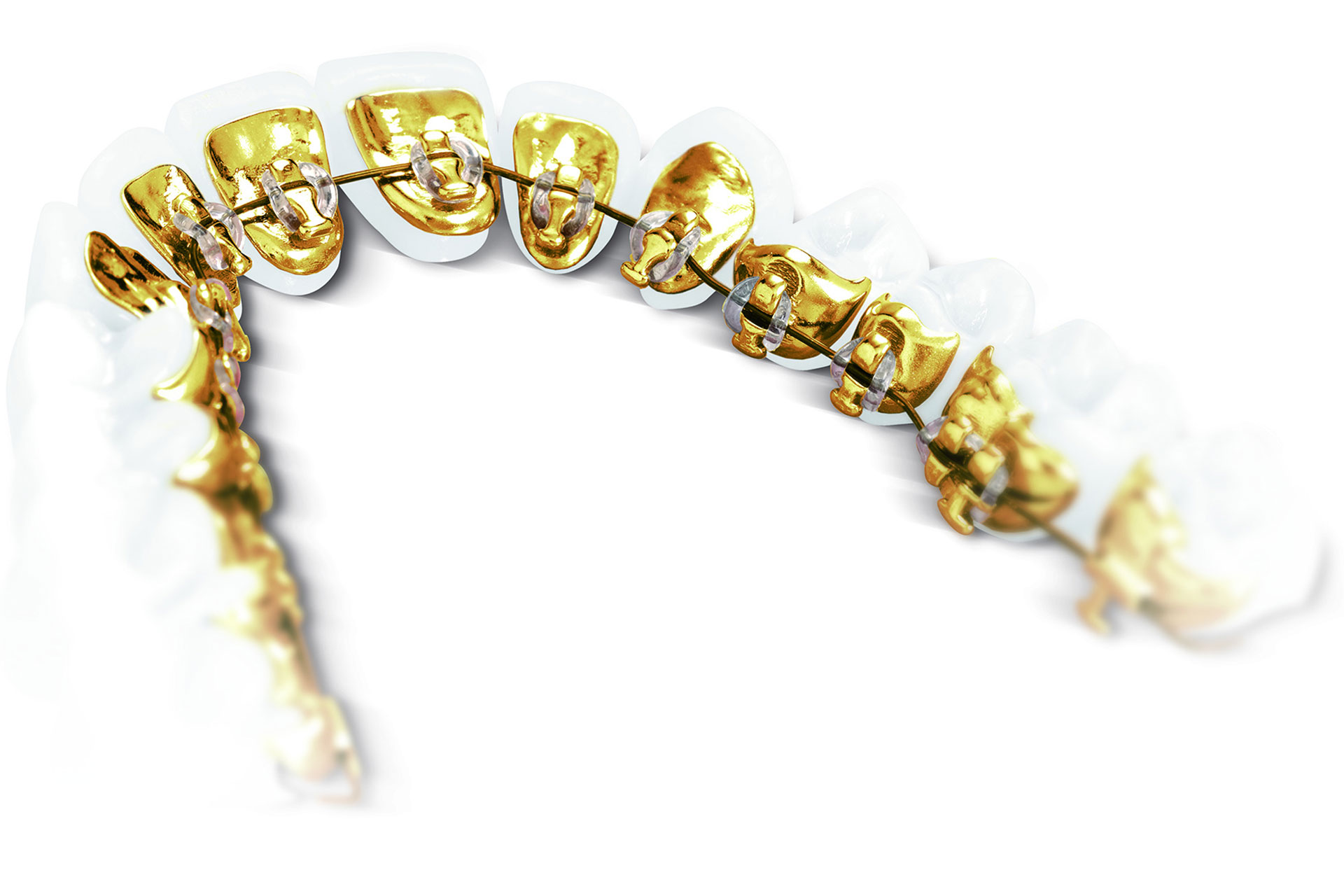
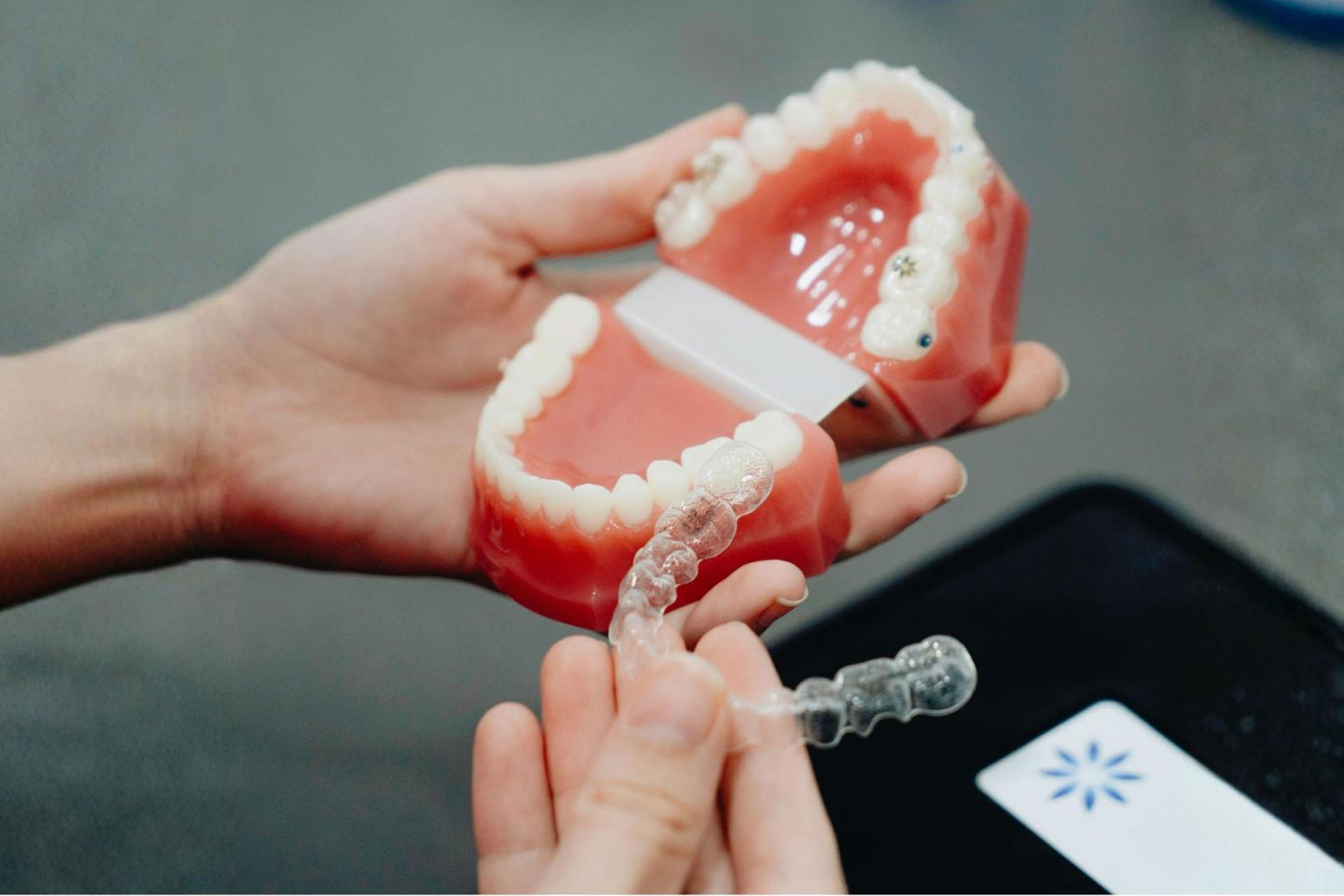
That said, it is worth having realistic expectations. Ceramic braces are not invisible. The archwire is still visible running across the teeth, and depending on the shade of the brackets relative to the patient’s tooth colour, the brackets themselves may be more or less apparent. Ceramic braces are significantly more discreet than metal braces, but they are not in the same category as lingual braces, which are hidden entirely on the inner surface of the teeth, or clear aligners, which are removable transparent trays.
Staining and Discolouration
One of the most common questions patients have about ceramic braces is whether they stain. The ceramic brackets themselves are generally stain-resistant and maintain their colour well throughout treatment. The component more prone to discolouration is the elastic ligature — the small module or tie that holds the archwire to each bracket. These are replaced at every adjustment visit, which means any discolouration that has occurred is cleared at each appointment.
Patients who drink a lot of coffee, tea, or red wine, or who smoke, are more likely to notice discolouration of the ligatures between visits. This does not affect the function of the braces, but it is worth being aware of. As noted above, tooth-coloured archwire coatings can also show staining over time..
Maintaining thorough oral hygiene throughout treatment is important with any fixed appliance. Plaque that accumulates around ceramic brackets, as with metal brackets, can affect the enamel surface underneath if not managed consistently.
Durability and Care
Ceramic is a hard material but it is more brittle than stainless steel. Ceramic brackets can chip or fracture under significant force, such as biting into very hard foods or trauma impacts to the mouth, carry a higher risk of bracket damage than with metal. In the event that a bracket chips or debonds, it will need to be replaced, which is straightforward, but worth avoiding where possible.
For most patients in normal circumstances, ceramic brackets perform reliably throughout the duration of treatment. Being mindful of harder foods, like particularly crusty bread, raw carrots, hard lollies, and ice, reduces the risk of breakage. The same dietary considerations that apply to metal braces apply to ceramic braces.
Regular attendance at adjustment appointments is important. Dr Carolyn typically schedules adjustment visits every six to eight weeks, and attending consistently helps keep treatment progressing on schedule.
Who Ceramic Braces May Suit
Ceramic braces are suitable for most of the same cases as metal braces; crowding, spacing, bite corrections, and a wide range of orthodontic presentations. Whether they are appropriate for a specific patient depends on a clinical assessment. In some cases, the specific tooth movements required or the patient’s bite relationship may make metal brackets a more practical choice, and Dr Carolyn will discuss this at the initial consultation.
They are a commonly chosen option among adults and older teenagers who are conscious of the appearance of fixed braces but who want or require a fixed appliance rather than a removable one. They are also sometimes used in combination with metal brackets, ceramic on the upper front teeth where visibility is greatest, and metal on the lower teeth where they are less noticeable.
Ceramic Braces Compared to Other Options
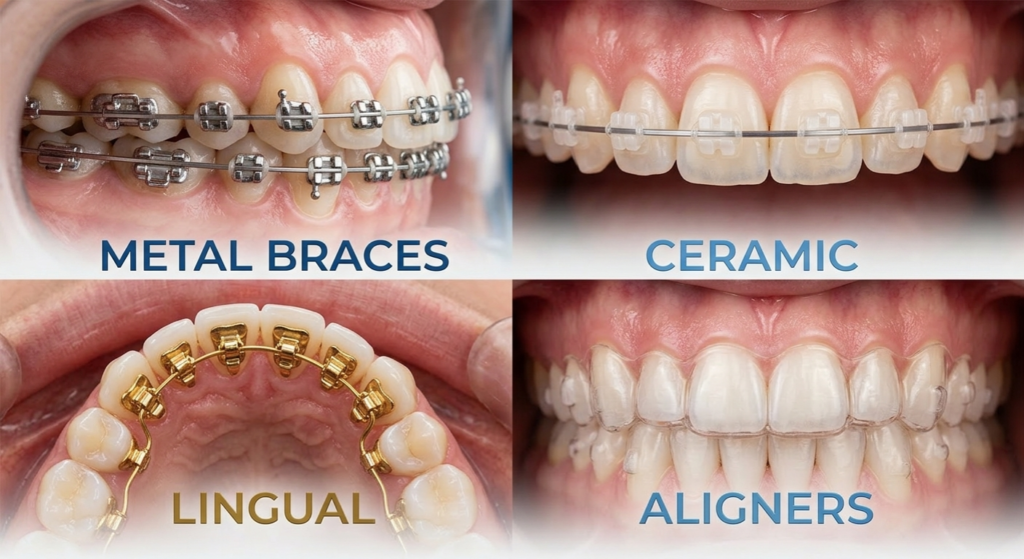
The table below provides a general overview of how ceramic braces compare to other orthodontic appliances. Individual suitability always depends on clinical assessment.
| Ceramic Braces | Lingual Braces | Aligners | Metal Braces |
|---|---|---|---|
| Mild visibility | No visibility | Mild visibility | High visibility |
| Most cases | Most cases | Some cases | Most cases |
| Initial lip and cheek adjustments | Initial tongue and speech adjustments | Minimal discomfort | Initial lip and cheek adjustments |
| Moderate dietary modification | Moderate dietary modification | Minimal dietary modification | Moderate dietary modification |
Is This Option Right For You
Ceramic braces are worth considering if you want the reliability of a fixed orthodontic appliance with a less visible appearance than standard metal braces. They are suitable for most orthodontic presentations and are a commonly chosen option among adults and older teenagers who are conscious of how braces look but who need or prefer a fixed rather than removable appliance.
They are not the right choice for everyone. If complete invisibility is the priority, lingual braces, which sit entirely behind the teeth, may be more appropriate. If removability is important, clear aligners are worth exploring. The honest answer is that the right appliance depends on your clinical needs, your lifestyle, and your preferences, and the only way to determine that properly is through an in-person assessment.
Dr Carolyn Ng welcomes patients of all ages for an initial consultation. No referral is required. Get in touch to arrange a time.
Frequently Asked Questions
Yes. Ceramic braces work on the same mechanical principles as metal braces and are clinically effective for the same range of orthodontic presentations. The difference is aesthetic rather than functional.
The ceramic brackets themselves are generally stain-resistant. The elastic ligature ties that hold the archwire to the bracket can discolour between visits, particularly with coffee, tea, red wine, or smoking. These are replaced at every adjustment appointment.
Ceramic brackets involve a higher material cost than metal brackets, and this is typically reflected in the overall treatment fee. The difference varies between practices. A full fee estimate will be provided following your initial assessment. Finance options are also available.
Yes, though some patients and clinicians choose to use ceramic brackets on the upper teeth where they are most visible, and metal brackets on the lower teeth where the aesthetic benefit is less significant. This is worth discussing at your consultation.
Treatment time depends on the complexity of the case rather than the bracket material. Most treatments take between 18 and 24 months. A personalised estimate will be provided following your initial assessment.
No referral is required. You can contact the practice directly to arrange an initial consultation at any time.

The Orthodontist Advantage
Dr. Carolyn Ng firmly believes that a beautiful smile can unlock a life of greater confidence and well-being. She is a highly skilled specialist and an expert in orthodontics and dentofacial orthopaedics.
Orthodontic specialists like Dr. Carolyn customizes each treatment—whether braces, clear aligners, or other discreet options—to fit your lifestyle and goals, helping you achieve a smile you’ll be proud of for years to come.
At her orthodontic practice in Hawthorn, Victoria, she works collaboratively and patiently with all her patients in creating beautiful, healthy smiles.
The information contained on this website is general in nature and does not cover all appliances or treatment modalities. It does not take into account your personal situation. Any surgical or invasive procedure carries risks. You should consider whether the information is appropriate to your needs, and where appropriate, seek advice from a dental professional.

Dr. Carolyn Ng
Orthodontist Hawthorn