

Dr Carolyn Ng – Specialist Orthodontist
Dr Carolyn Ng
Specialist Orthodontist
Specialist Orthodontist

Braces or Aligners: Which Orthodontic Option Is Best for You?
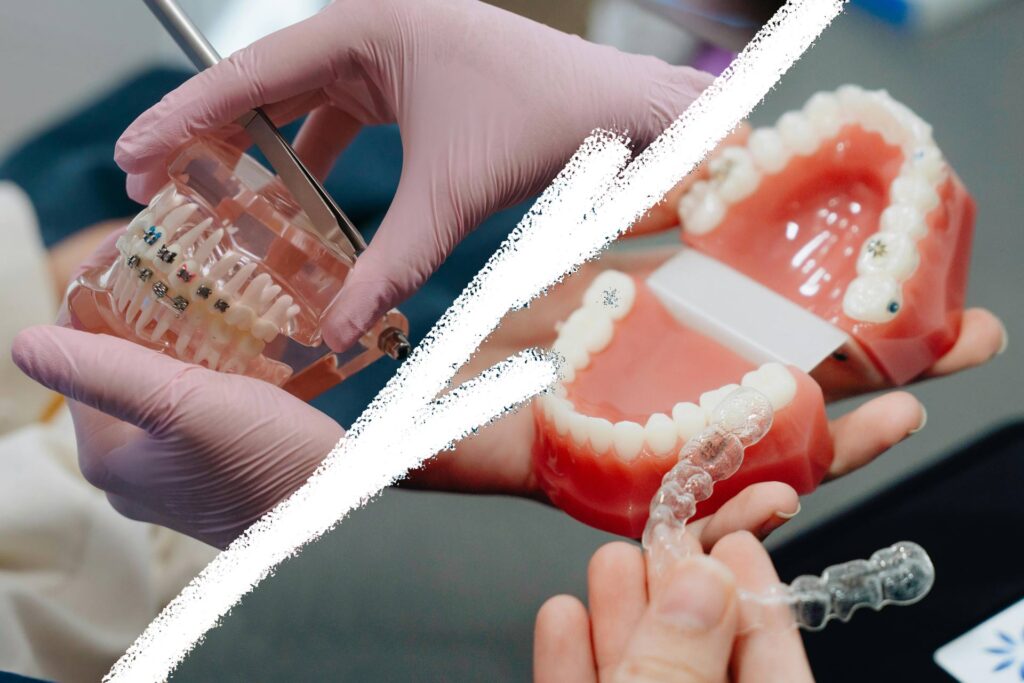
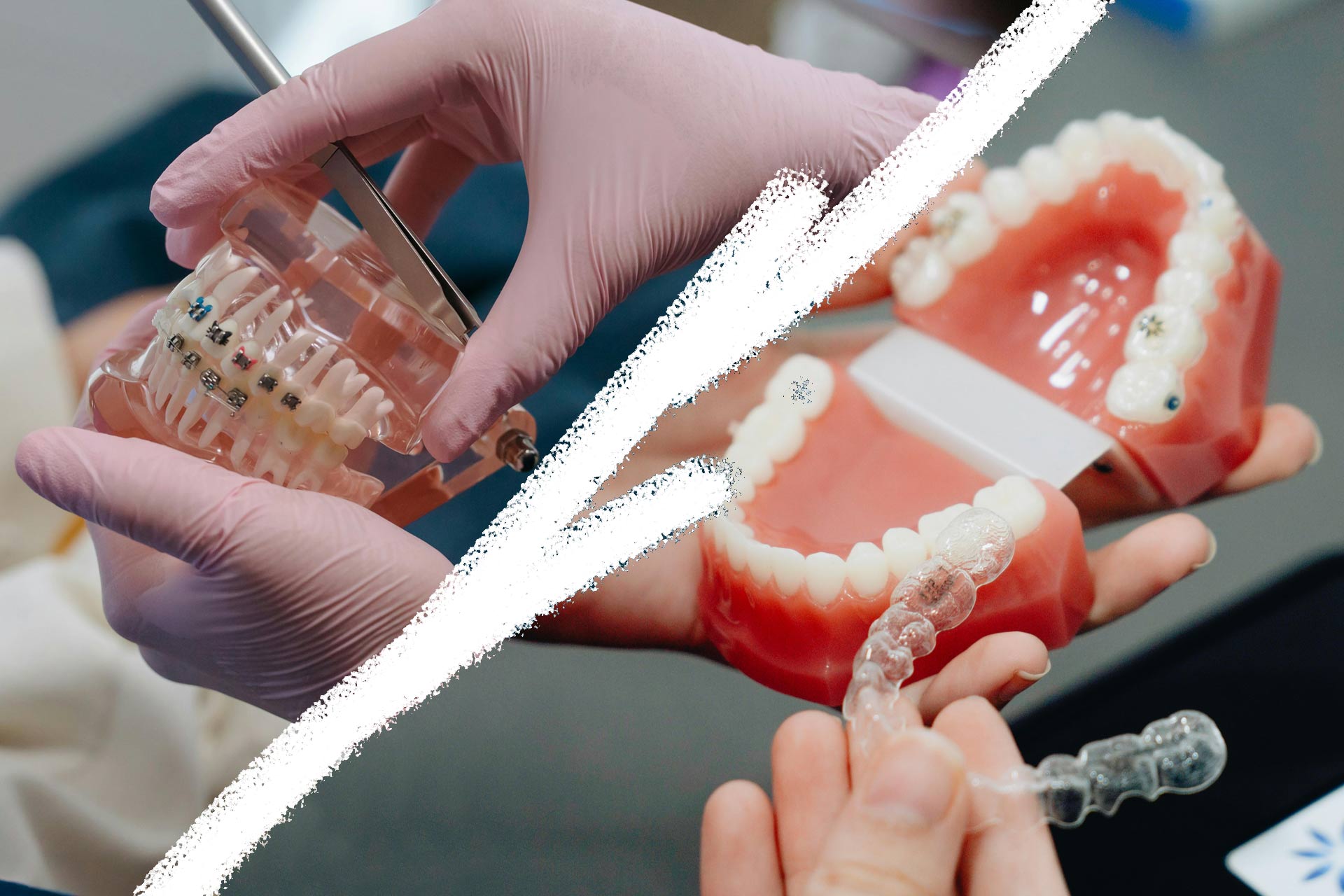
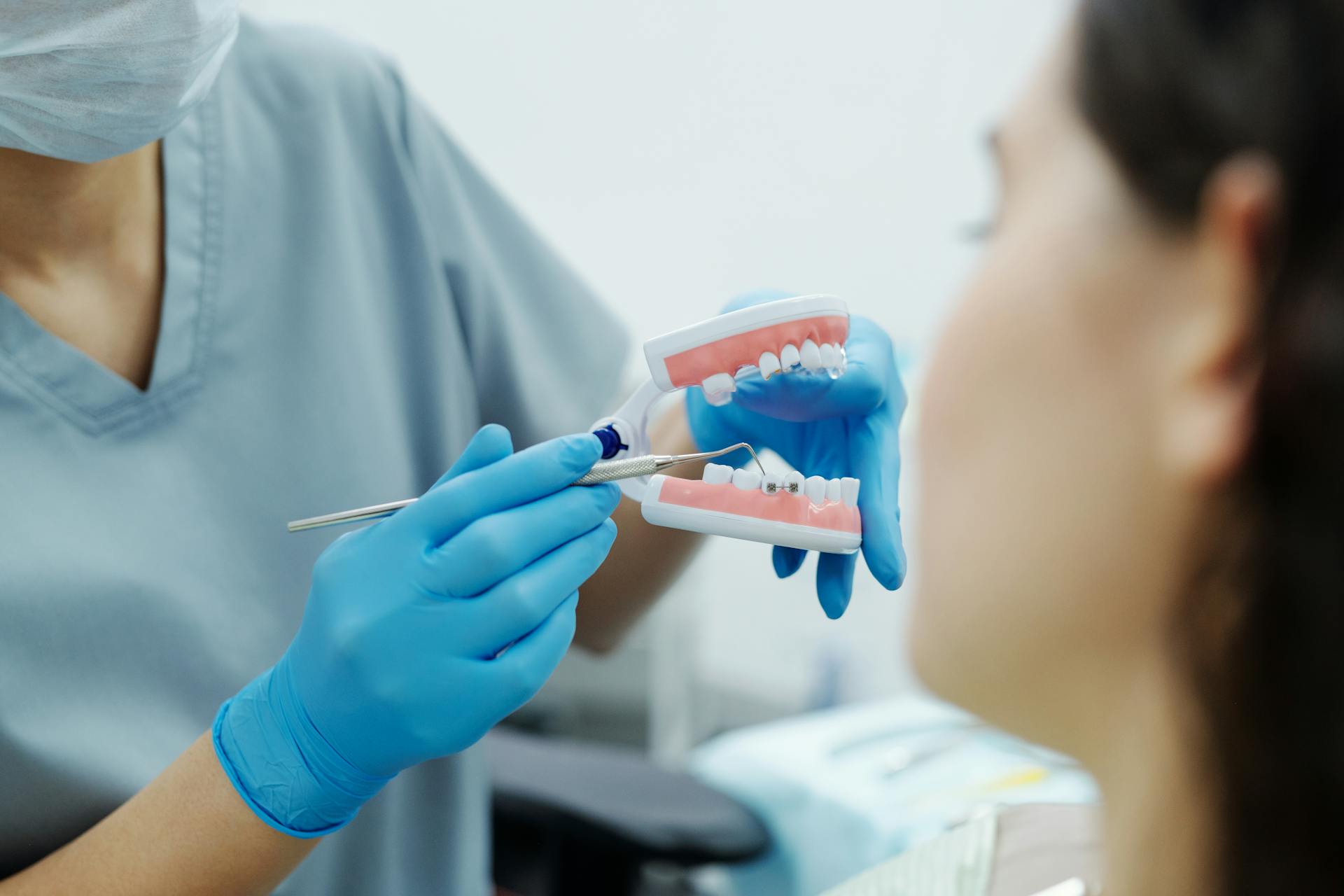
When people begin exploring orthodontic treatment, the question of braces versus aligners is usually one of the first they ask. Both are well-established orthodontic tools. Both can achieve meaningful tooth movement. And both have genuine strengths and limitations that make each more or less suitable depending on the individual clinical situation.
This article covers how each option works, what the key considerations are, and what factors should actually drive the decision which is, ultimately, a clinical one rather than a personal preference.
Table of Contents
- How Fixed Braces Work
- How Clear Aligners Work
- The Key Differences
- What Actually Determines the Right Choice
- A Note on Lingual and Ceramic Braces
- Comparing Your Options
- How to Make the Decision
- Frequently Asked Questions
How Fixed Braces Work
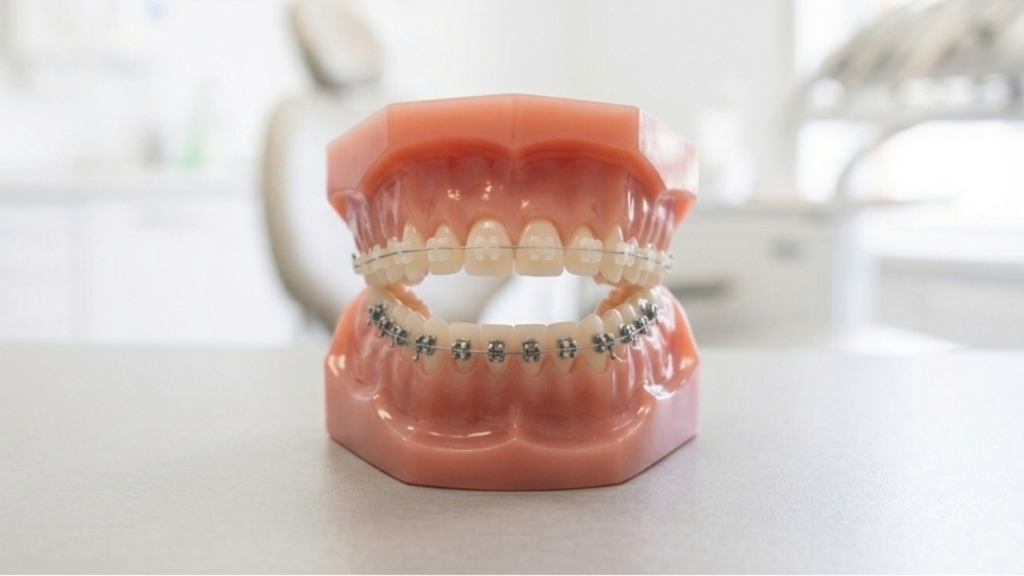
Fixed braces consist of brackets bonded to the front surface of each tooth, connected by an archwire that applies controlled forces to move the teeth over time. They are called “fixed” because they remain in place for the duration of treatment and cannot be removed by the patient.
The brackets can be made from stainless steel, giving the conventional metal brace appearance, or from tooth-coloured ceramic material for a less visible option. In both cases the mechanical principles are the same. Archwires are adjusted roughly every six to eight weeks to progress tooth movement through each planned stage of treatment. A range of accessory components including elastics, springs, and coils are used to address specific tooth movements and bite corrections.
Because fixed braces are always working and compliance with wearing them is not a variable. This is one of their practical advantages, particularly for patients or families where consistent appliance use may be difficult to maintain. You can read more about the full range of fixed brace options, including metal braces, ceramic braces, and lingual braces, on their respective appliance pages.
How Clear Aligners Work
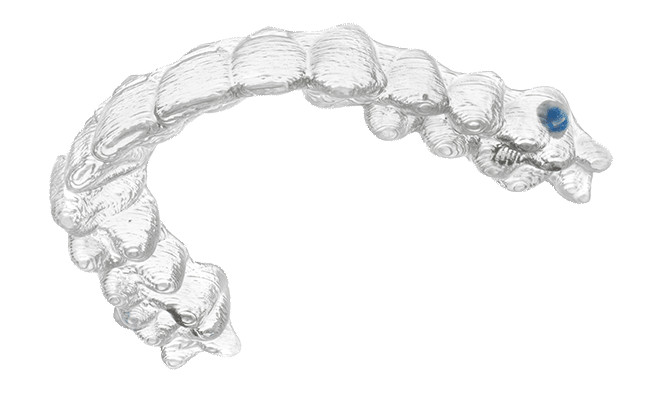
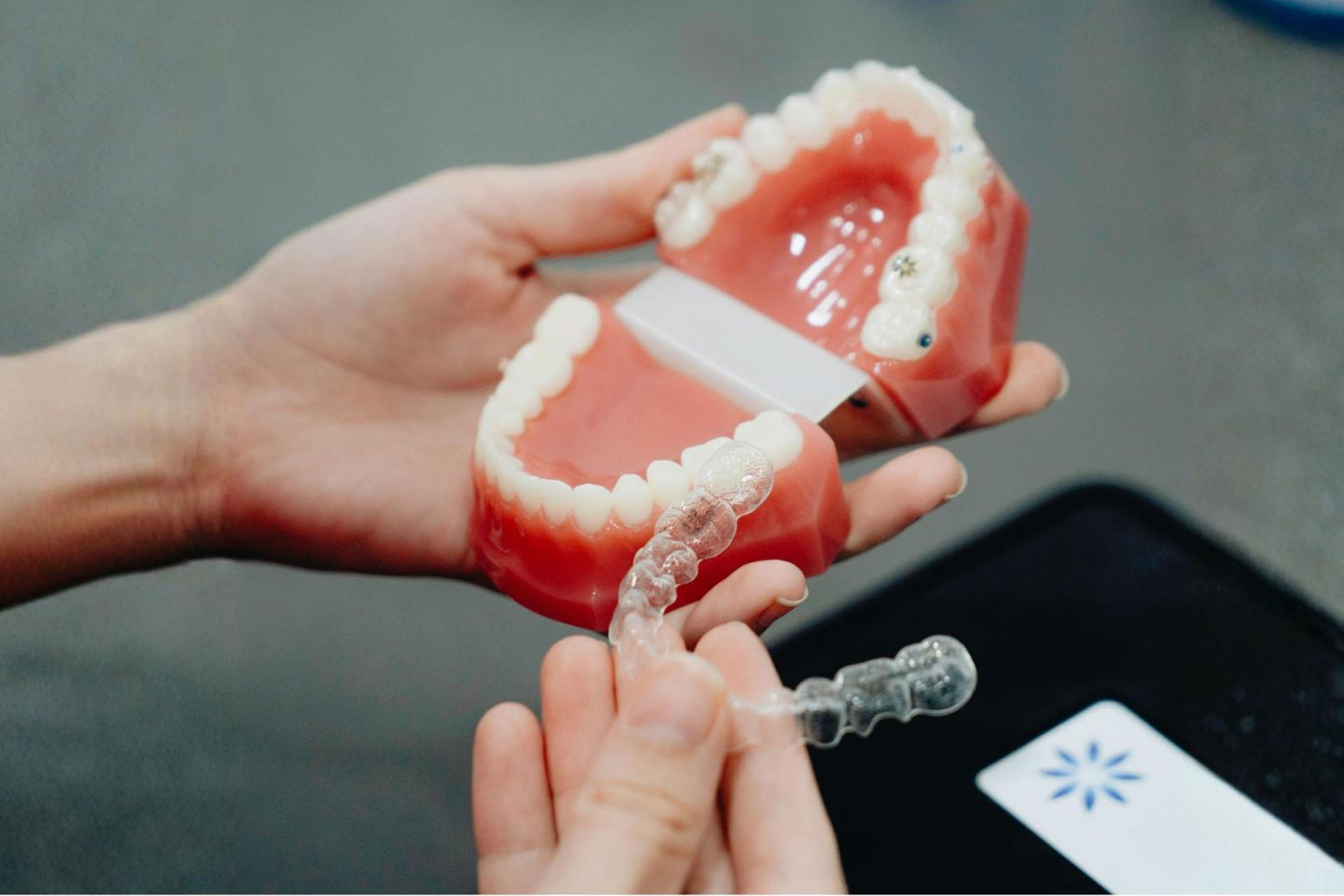
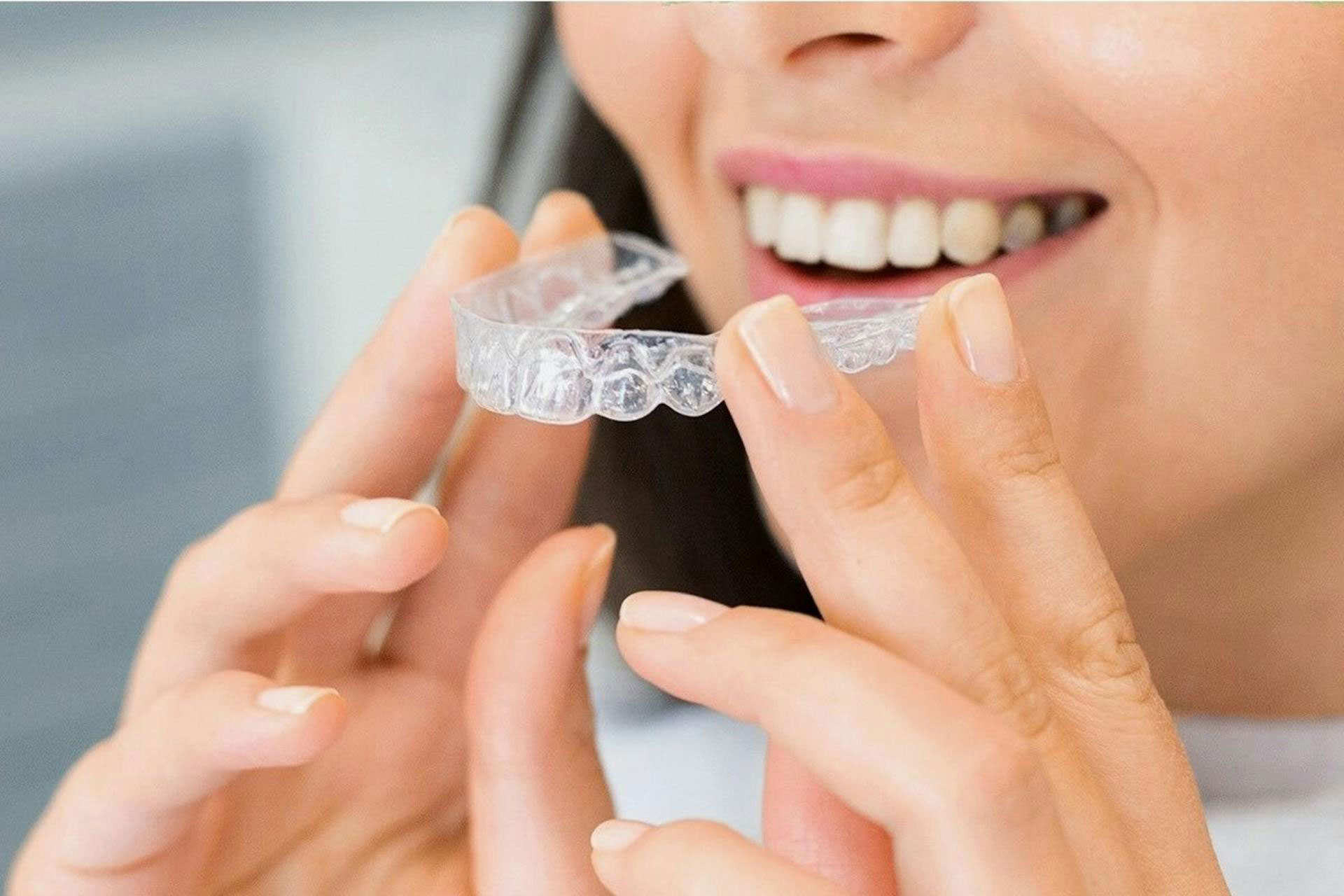
Clear aligners are a series of custom-fabricated transparent plastic trays, each designed to move the teeth incrementally toward the planned final position. Each tray is worn for a set period, usually one to two weeks, before the patient progresses to the next in the series. The trays are removed for meals, drinks other than water, and oral hygiene.
The treatment is planned using 3D digital software, which maps out the intended movement of each tooth before any tray is fabricated. In many cases, small tooth-coloured attachments are bonded to specific teeth to help the aligner apply forces in the correct direction. These attachments are removed at the end of treatment.
Because the aligners are removable, the outcome is more dependent on consistent patient compliance than with fixed braces. Aligners need to be worn for approximately 20 to 22 hours per day to achieve the planned tooth movements on schedule. For patients who are diligent about wear time, aligners can be a very effective treatment pathway. For those who find consistent wear difficult to maintain, whether due to lifestyle, habit, or the nature of the case, the outcome may be less predictable. The clear aligners article covers the process and what to expect in more detail.
The Key Differences
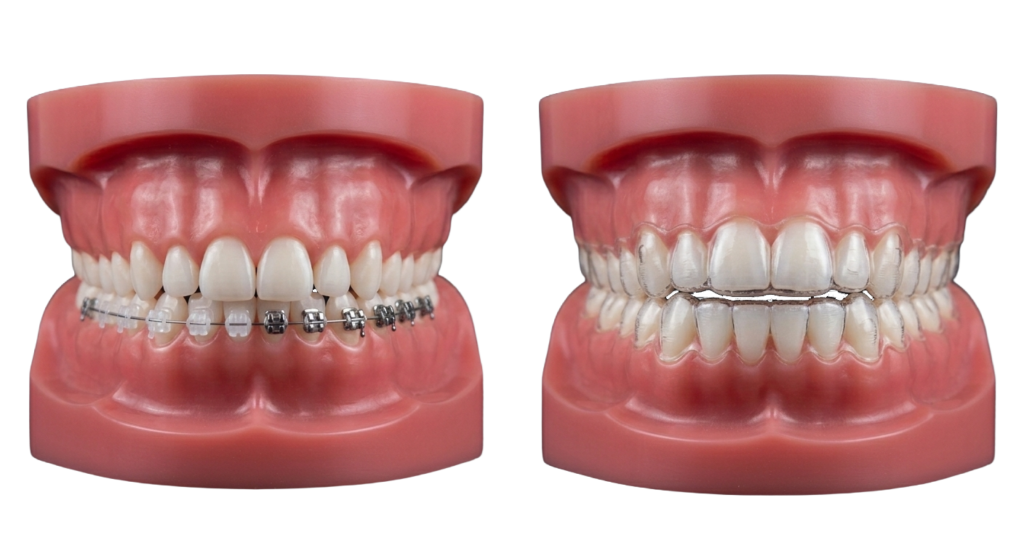
Understanding the practical differences between the two options helps frame the decision more clearly.
Fixed braces are always in place, applying continuous forces regardless of what the patient does between appointments. They are suitable for the full range of orthodontic presentations including complex bite corrections, significant rotations, and cases requiring precise three-dimensional control of individual teeth. The trade-off is visibility, particularly with metal brackets, and some dietary and oral hygiene considerations that require adjustment during treatment.
Clear aligners are less visible during treatment and are removable, which many patients find convenient. They are effective for a broad range of cases but have limitations in more complex presentations, particularly where significant vertical tooth movement, large rotations, or skeletal corrections are involved. Their effectiveness also depends directly on how consistently they are worn.
Neither option is inherently superior. The question is: Which is most appropriate for a given patient’s clinical needs, lifestyle, and preferences.
What Actually Determines the Right Choice
In an ideal world, every patient would have every option available to them. In practice, the clinical situation narrows the field considerably, and an honest discussion with a specialist orthodontist is the only reliable way to understand which options are genuinely appropriate for a specific case.
The factors that matter most in the clinical decision include the complexity and nature of the tooth movements required, the health of the teeth, gums, and bone, the patient’s age and stage of dental development, and the degree to which compliance with a removable appliance is realistic. Cost and aesthetics are legitimate personal considerations, but they are secondary to clinical suitability, and a treatment that is less suited to the clinical situation will not achieve as good an outcome regardless of its other attributes.
It is also worth knowing that fixed and removable appliances are sometimes used in combination. Some patients begin with one type of appliance and transition to another during treatment, or use aligners for part of their correction and fixed appliances for specific movements that aligners do not manage as efficiently. The treatment plan is tailored to the individual, not the other way around. Understanding how the treatment process works from consultation through to retention gives useful context for what that planning stage involves.
A Note on Lingual and Ceramic Brace
The braces versus aligners framing is common but somewhat reductive as there are more than two options available, and for many patients one of the other fixed appliance types may be the most appropriate choice.
Lingual braces are fixed appliances that sit on the inner surface of the teeth, making them completely hidden from the front. For patients who want the clinical precision and compliance certainty of fixed treatment without any visible hardware, lingual braces are worth understanding. The article on lingual braces as a hidden orthodontic treatment option</a> covers how they work in detail.
Ceramic braces use tooth-coloured brackets that are considerably less visible than metal, while retaining the clinical range of a fixed appliance. For patients who want something less noticeable than metal braces but who need or prefer a fixed option over aligners or lingual braces, ceramic braces occupy a useful middle ground. The ceramic braces article covers the practical considerations including staining, durability, and who they suit.
Comparing Your Options
The table below provides a general overview of how ceramic braces compare to other orthodontic appliances. Individual suitability always depends on clinical assessment.
| Metal Braces | Ceramic Braces | Lingual Braces | Aligners |
|---|---|---|---|
| High visibility | Mild visibility | No visibility | Mild visibility |
| All cases | Most cases | Most cases | Some cases |
| Fixed — not removable | Fixed — not removable | Fixed — not removable | Removable |
| Initial lip and cheek adjustments | Initial lip and cheek adjustments | Initial tongue and speech adjustments | Minimal discomfort |
| Moderate dietary modification | Moderate dietary modification | Moderate dietary modification | Minimal dietary modification |
How to Make the Decision
The most useful thing this article can offer is a realistic framing: the choice between braces and aligners, or any other orthodontic appliance, is not primarily a lifestyle or aesthetic decision. It is a clinical one, and the starting point is always an in-person assessment with diagnostic imaging.
A specialist orthodontist can assess the full picture, your teeth, bite, bone, and gum health, and give you an honest account of which options are clinically appropriate for your situation, what each would involve, and what the likely outcomes are. From there, personal preferences around appearance, convenience, and cost can help guide the final choice between options that are all clinically suitable.
Dr Carolyn Ng is an Ahpra-registered Specialist Orthodontist practising in Hawthorn. She welcomes patients of all ages for an initial consultation and will take the time to discuss all relevant options for your specific situation. No referral is required so contact the practice to arrange a time.
Frequently Asked Questions
Effectiveness depends on the clinical situation rather than the appliance type. Fixed braces are suitable for the full range of orthodontic presentations and provide continuous force that does not rely on patient compliance. Clear aligners are effective for many cases but have limitations in more complex presentations and require consistent daily wear of 20 to 22 hours to achieve planned outcomes. Neither is universally superior — the right choice depends on the individual case.
Personal preference is a legitimate part of the decision, but only among options that are clinically appropriate for your specific situation. Some cases can be managed equally well with either fixed braces or aligners, in which case preference genuinely guides the choice. In other cases, one option may be significantly more suitable than the other, and a clinical assessment is the only way to establish this.
Clear aligners have become more capable as the technology has developed and can manage a broader range of presentations than earlier systems. However, they still have limitations in cases involving significant vertical tooth movement, large rotations, or skeletal corrections. A specialist orthodontist can assess whether aligners are appropriate for a specific case following examination and diagnostic imaging.
Yes. Ceramic braces use tooth-coloured brackets that are considerably less visible than metal, while retaining the clinical range of a fixed appliance. Lingual braces sit on the inner surface of the teeth and are completely hidden from the front. Both are fixed options that do not require the compliance management of removable aligners.
Treatment time depends primarily on the complexity of the case rather than the appliance type. Most orthodontic treatments take between 18 and 24 months regardless of whether braces or aligners are used. With aligners, inconsistent wear can extend treatment time. A personalised estimate will be provided following your initial assessment.
No referral is required. You can contact the practice directly to arrange an initial consultation at any time.


The Orthodontist Advantage
Dr. Carolyn Ng firmly believes that a beautiful smile can unlock a life of greater confidence and well-being. She is a highly skilled specialist and an expert in orthodontics and dentofacial orthopaedics.
Orthodontic specialists like Dr. Carolyn customizes each treatment—whether braces, clear aligners, or other discreet options—to fit your lifestyle and goals, helping you achieve a smile you’ll be proud of for years to come.
At her orthodontic practice in Hawthorn, Victoria, she works collaboratively and patiently with all her patients in creating beautiful, healthy smiles.
The information contained on this website is general in nature and does not cover all appliances or treatment modalities. It does not take into account your personal situation. Any surgical or invasive procedure carries risks. You should consider whether the information is appropriate to your needs, and where appropriate, seek advice from a dental professional.

Dr. Carolyn Ng
Orthodontist Hawthorn