


Dr Carolyn Ng – Specialist Orthodontist
Dr Carolyn Ng
Specialist Orthodontist
Specialist Orthodontist


Clear Aligners: Understanding How They Work and What to Expect

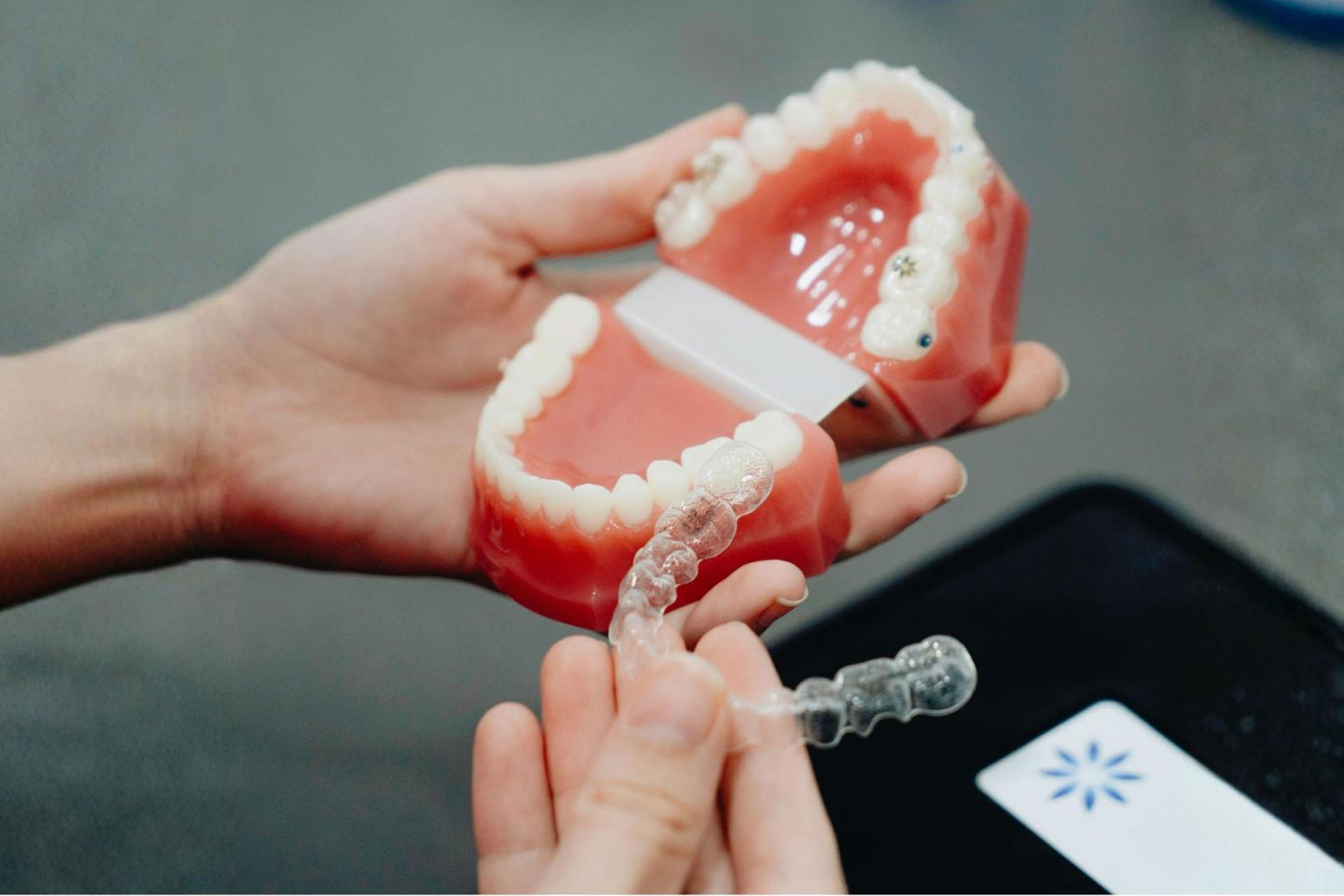
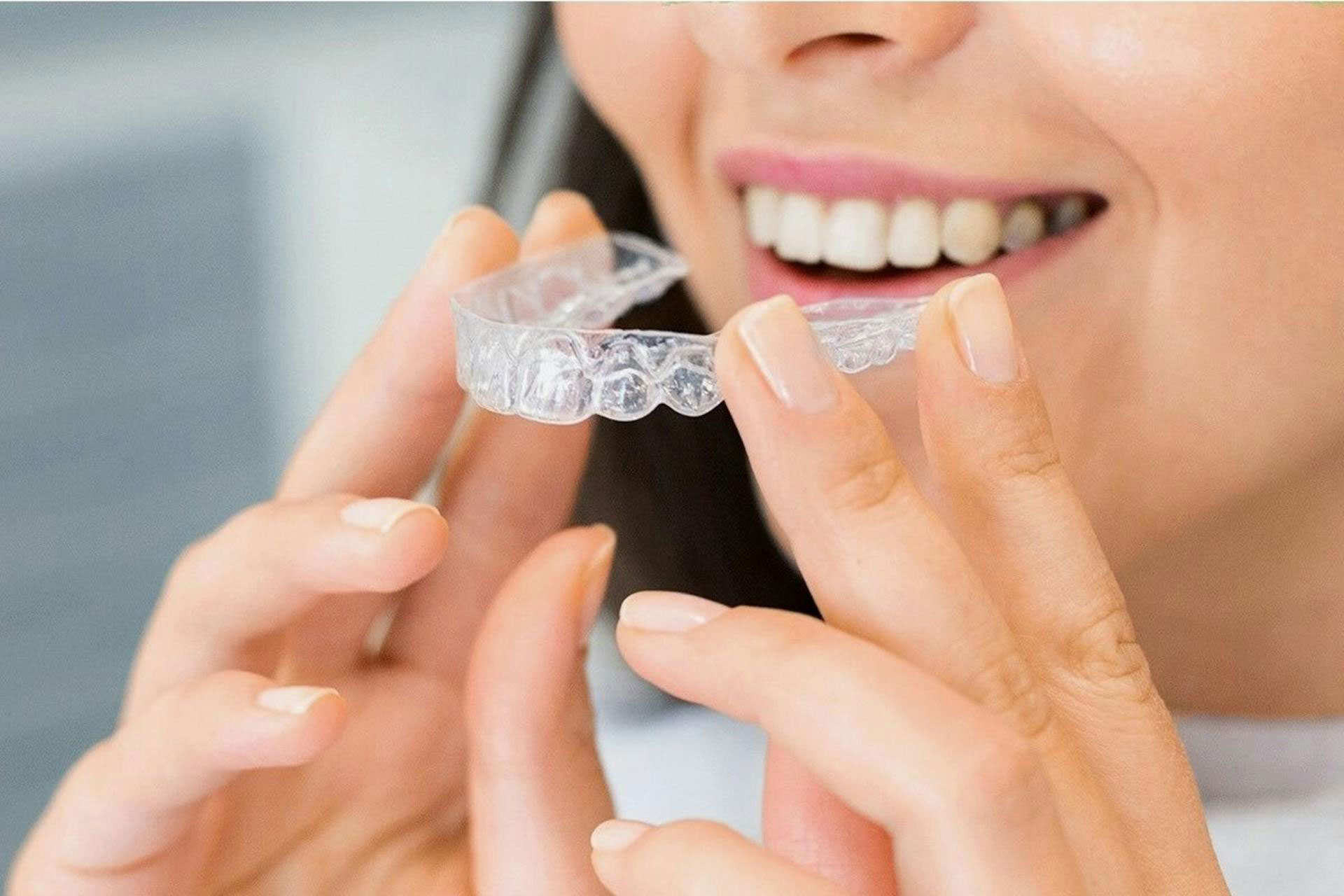
Clear aligners have become a well-established orthodontic option for patients seeking a removable, less visible alternative to fixed braces. Made from transparent, flexible plastic and custom-fitted to each patient’s teeth, they work by applying controlled forces to move teeth gradually through a planned sequence of trays.
This article explains how the treatment works, what is involved in the process, and what to consider when thinking about whether aligners may be appropriate for you.
Table of Contents
- How Clear Aligners Work
- Who Clear Aligners May Be Suitable For
- The Treatment Process
- Clear Aligners Compared to Other Options
- Compliance and What It Means for Your Result
- Aftercare and Retention
- Frequently Asked Questions
How Clear Aligners Work
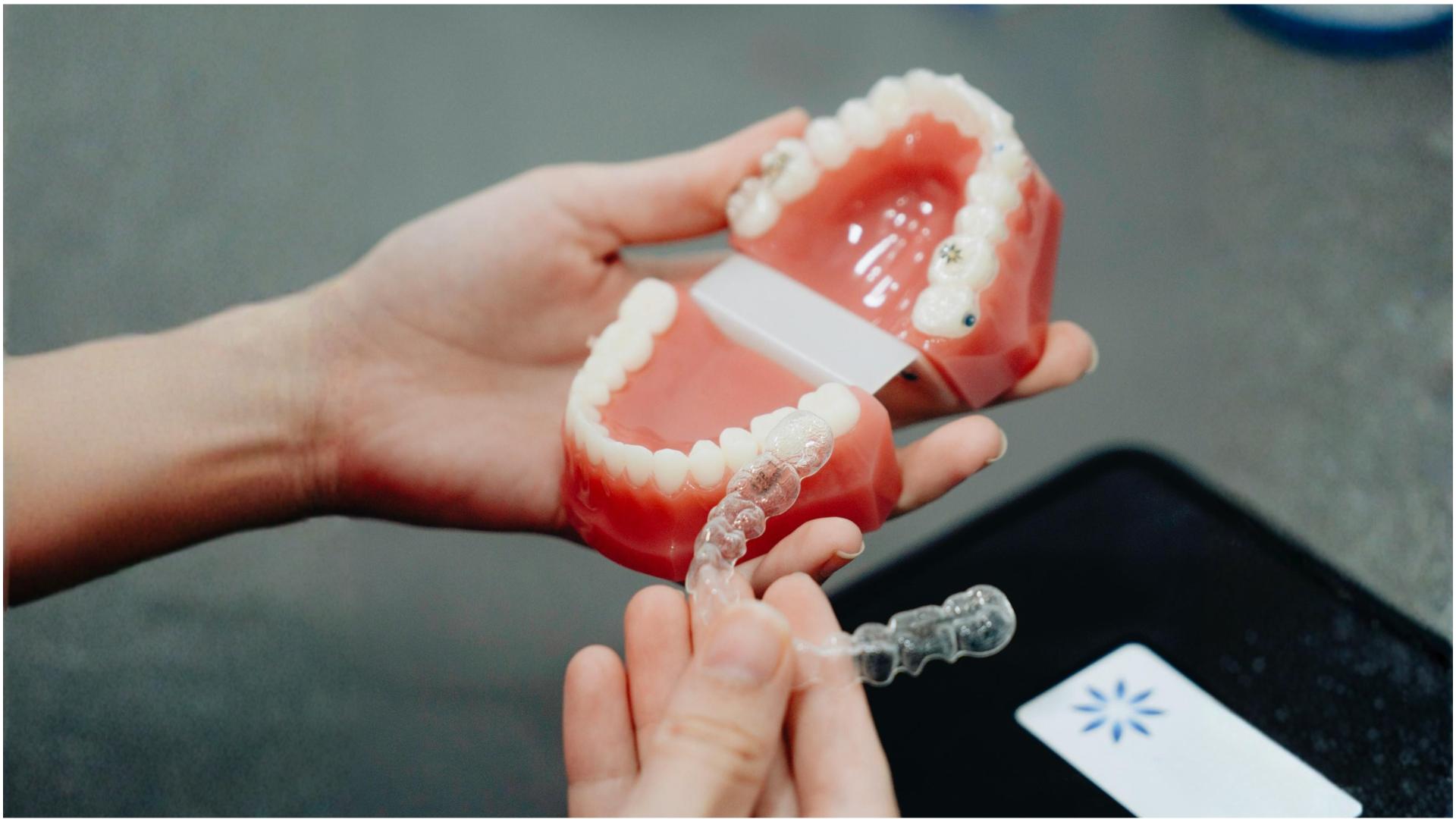
Each aligner tray is fabricated from a precise digital scan of the patient’s teeth and is designed to apply gentle, targeted forces to specific teeth at each stage of treatment. Patients progress through a series of trays in sequence, with each tray moving teeth incrementally closer to the planned final position.
In many cases, small tooth-coloured attachments are bonded to certain teeth before treatment begins. These attachments act as anchors that help the aligner grip the tooth surface and apply force in the correct direction. They are discreet and are removed at the end of treatment, but it is worth understanding that aligners with attachments are not completely invisible — they are far less noticeable than fixed braces, but patients should have realistic expectations.
Treatment is planned using 3D digital software, which allows Dr Carolyn to map out the intended movement of each tooth from start to finish before any tray is fabricated.
Who Clear Aligners May Be Suitable For
Clear aligners are effective for a range of orthodontic presentations including crowding, spacing, and a number of bite issues. Whether they are appropriate for a specific patient depends on the complexity of the case and other clinical factors that can only be assessed through a proper examination and diagnostic imaging.
Aligners are a removable appliance, which makes them a practical option for patients who want the flexibility to remove their orthodontic appliance for meals, oral hygiene, or specific occasions. This same removability, however, means that the outcome is more dependent on patient compliance than with fixed appliances — a consideration that is worth thinking through honestly before committing to this treatment pathway.
Dr Carolyn works with a number of aligner systems and will discuss which option is clinically appropriate for your situation following your assessment.
The Treatment Process
| Step | Description |
|---|---|
| Initial Consultation | Review of dental history, X-rays, discussion of goals and treatment considerations |
| Confirm plan and 3D Scan | Finalise treatment plan, take digital scans, review simulated tooth movement |
| Aligner Fabrication | Custom manufacture and delivery of aligner series |
| Initial Fitting | Deliver first set of trays, place any attachments, review wear instructions |
| Progress Reviews | Check-ups to monitor tooth movement and refine the plan as needed |
| Refinements if Required | Additional aligners to address any remaining movements |
| Debonding and Retention | Remove attachments, polish teeth, fit retainers to maintain results |
Clear Aligners Compared to Other Options
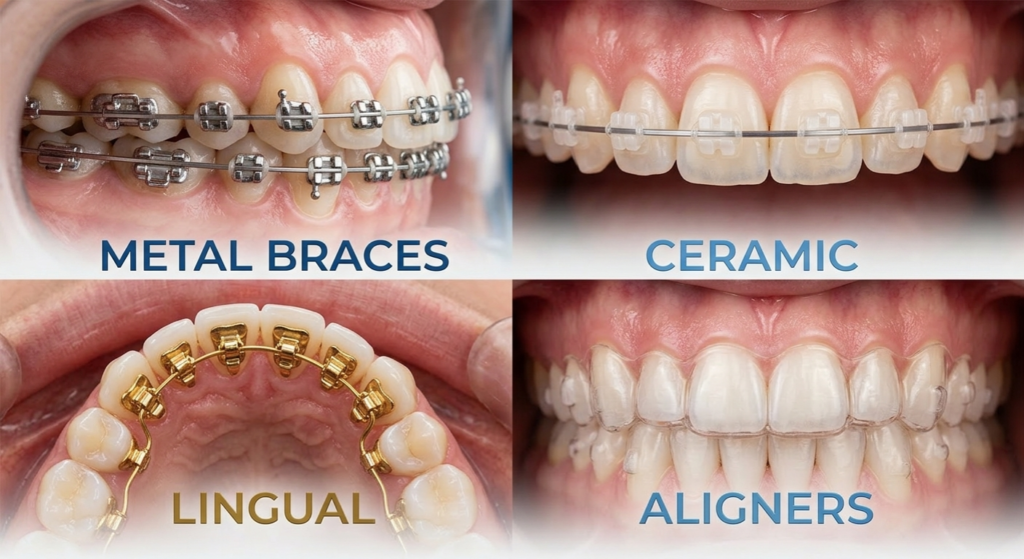
The table below offers a general overview of how clear aligners compare to other orthodontic appliances. Individual suitability depends on clinical assessment — this table is intended as a starting point for understanding the options, not a guide to self-selection.
| Aligners | Lingual Braces | Ceramic Braces | Metal Braces |
|---|---|---|---|
| Mild visibility | No visibility | Mild visibility | High visibility |
| Some cases | Most cases | Most cases | Most cases |
| Minimal discomfort | Initial tongue and speech adjustments | Initial lip and cheek adjustments | Initial lip and cheek adjustments |
| Minimal dietary modification | Moderate dietary modification | Moderate dietary modification | Moderate dietary modification |
Compliance and What It Means for Your Result
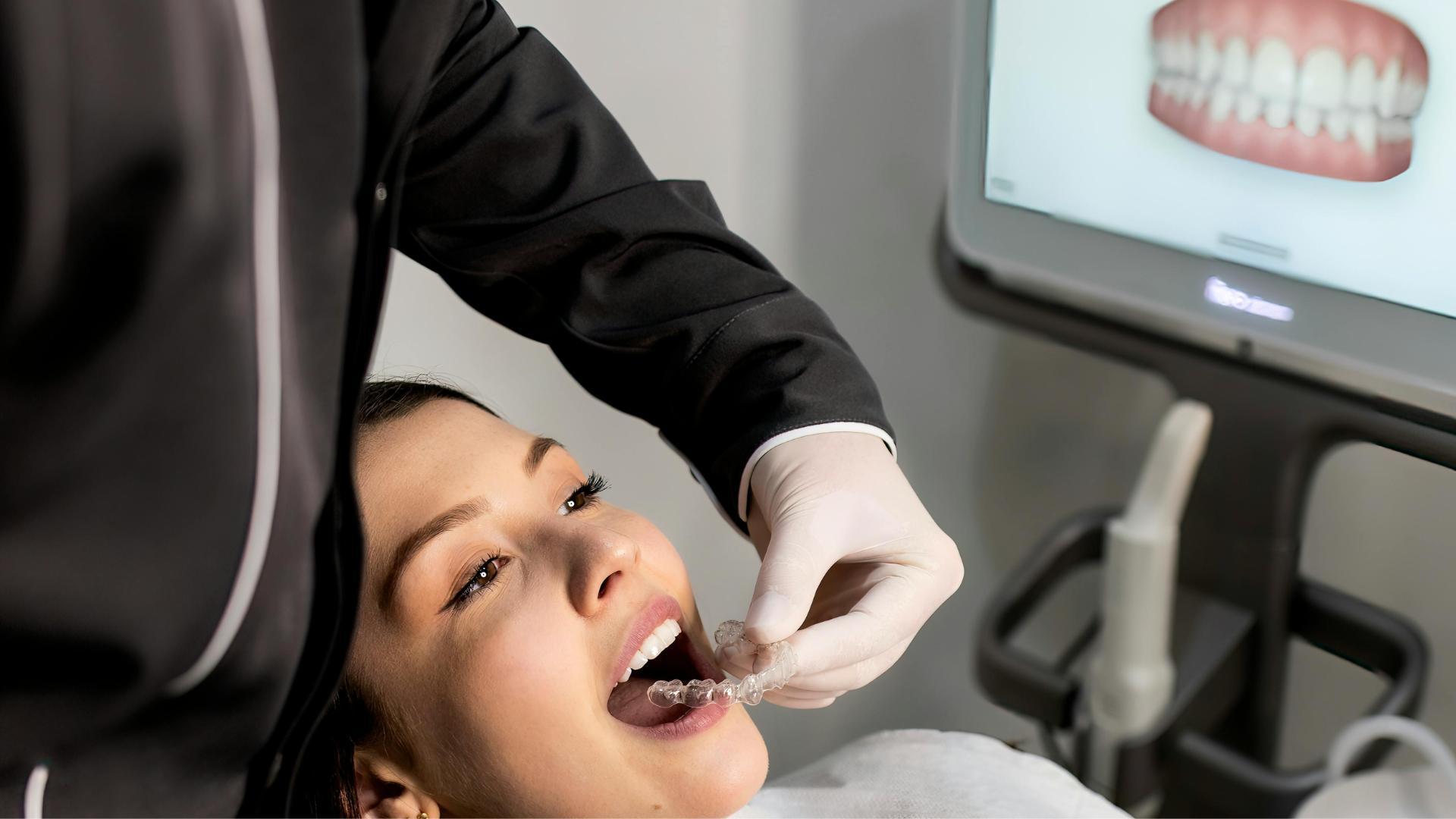
Clear aligners need to be worn for approximately 20 to 22 hours per day to achieve the planned tooth movements on schedule. Consistent wear means the teeth are responding to the planned forces; inconsistent wear means they are not, which can affect how accurately the final result matches the treatment plan and may require additional refinement trays.
This is not intended to discourage patients from considering aligners — it is simply worth understanding before starting. Patients who are well-informed about the compliance requirement tend to manage it more effectively. Dr Carolyn will discuss what consistent wear looks like in practice at your consultation.
Aftercare and Retention
As with all orthodontic treatment, retainers are required at the end of aligner treatment to maintain the result. The tendency for teeth to shift back toward their original positions after treatment is not unique to aligners — it is a characteristic of how the body responds when active orthodontic forces are removed.
Retainers should be worn as instructed by Dr Carolyn. The specific schedule will depend on your individual case, but most patients wear retainers full time in the first year following treatment and then transition to night-time wear on an ongoing basis thereafter.
Frequently Asked Questions
Clear aligners are effective for a broad range of presentations, but not all cases. Some bite corrections and tooth movements are better managed with fixed appliances. A clinical assessment is the only reliable way to determine what is appropriate for your specific situation.
Some mild pressure or discomfort is normal when a new tray is first inserted, as the aligner begins applying force to move teeth. This typically settles within a day or two. If you experience persistent pain or sharp discomfort, contact the practice.
Aligners are designed to be removable, and you should take them out for meals, drinks other than water, and oral hygiene. Outside of those situations, they should be worn consistently — approximately 20 to 22 hours per day — for the treatment to progress as planned.
These are attachments — small tooth-coloured composite shapes bonded to specific teeth to help the aligner apply force in the correct direction. They are removed at the end of treatment and polished off the tooth surface.
Treatment time varies considerably depending on the complexity of the case. Dr Carolyn will give you a personalised estimate following your initial assessment and the preparation of your treatment plan.
No referral is required. You can contact the practice directly at any time to arrange an initial consultation.



The Orthodontist Advantage
Dr. Carolyn Ng firmly believes that a beautiful smile can unlock a life of greater confidence and well-being. She is a highly skilled specialist and an expert in orthodontics and dentofacial orthopaedics.
Orthodontic specialists like Dr. Carolyn customizes each treatment—whether braces, clear aligners, or other discreet options—to fit your lifestyle and goals, helping you achieve a smile you’ll be proud of for years to come.
At her orthodontic practice in Hawthorn, Victoria, she works collaboratively and patiently with all her patients in creating beautiful, healthy smiles.
The information contained on this website is general in nature and does not cover all appliances or treatment modalities. It does not take into account your personal situation. Any surgical or invasive procedure carries risks. You should consider whether the information is appropriate to your needs, and where appropriate, seek advice from a dental professional.

Dr. Carolyn Ng
Orthodontist Hawthorn